NECO Hosts Third Annual Industry Collaborative
The Third Annual Industry Collaborative focused on Eye Care’s Imbalance between Supply and Demand.
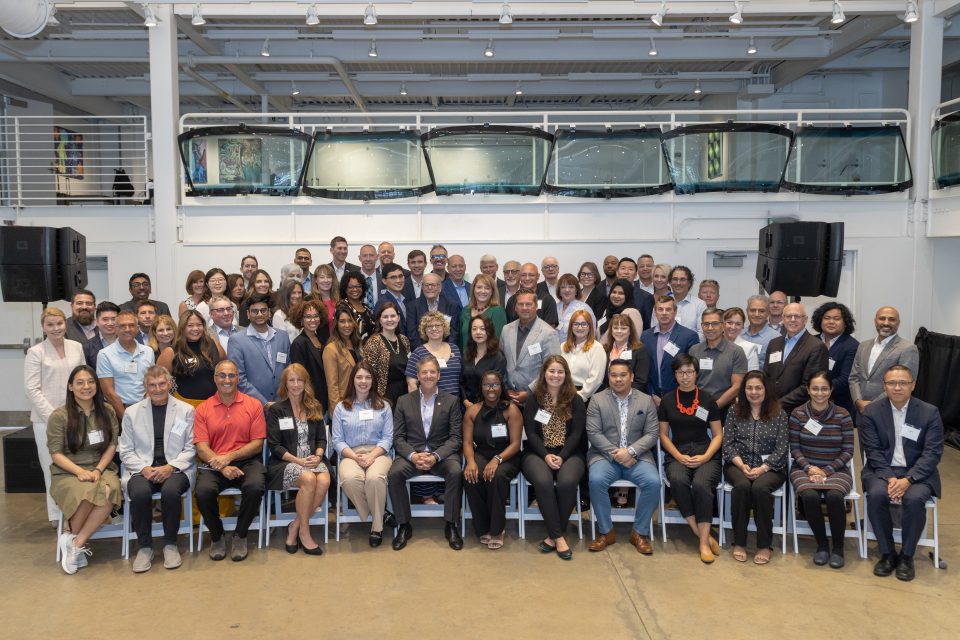
The New England College of Optometry (NECO) welcomed over 120 guests from the eye care industry, professional organizations, health care, academia, and media to the Beacon Street Campus on August 21 and at Artists for Humanity on August 22 for the third annual NECO Industry Collaborative. The event brought together people who typically compete or may not otherwise interact, to connect, debate, and deliberate the challenging topic of supply and demand in optometry.

NECO Vice President for Professional Affairs Dr. Gary Chu addresses the attendees during the In NECO Industry Collaborative
Dr. Gary Chu, NECO Vice President for Professional Affairs, welcomed NECO’s guests and opened the session by reminding attendees, according to the Bureau of Labor Statistics, from 2021 to 2031, demand for optometrists is expected to grow 8-10% and demand for ophthalmologists is expected to grow 4-7%. “This is a staggering increase in demand for medical eye care and while the number of colleges of optometry has increased and ASCO has implemented the Optometry Gives Me Life campaign, the applicant pool of prospective optometry students has remained nearly flat,” said Dr. Chu. According to Dr. Richard Edlow, the “Eyeconomist”, ophthalmologists will increase 0.5% per year and the need for medical eye exams will increase by 25%, that’s 15 million additional eye exams that will need to be performed per year. This data, along with the current difficulty many companies face filling optometrist positions, highlights the imbalance between supply and demand.
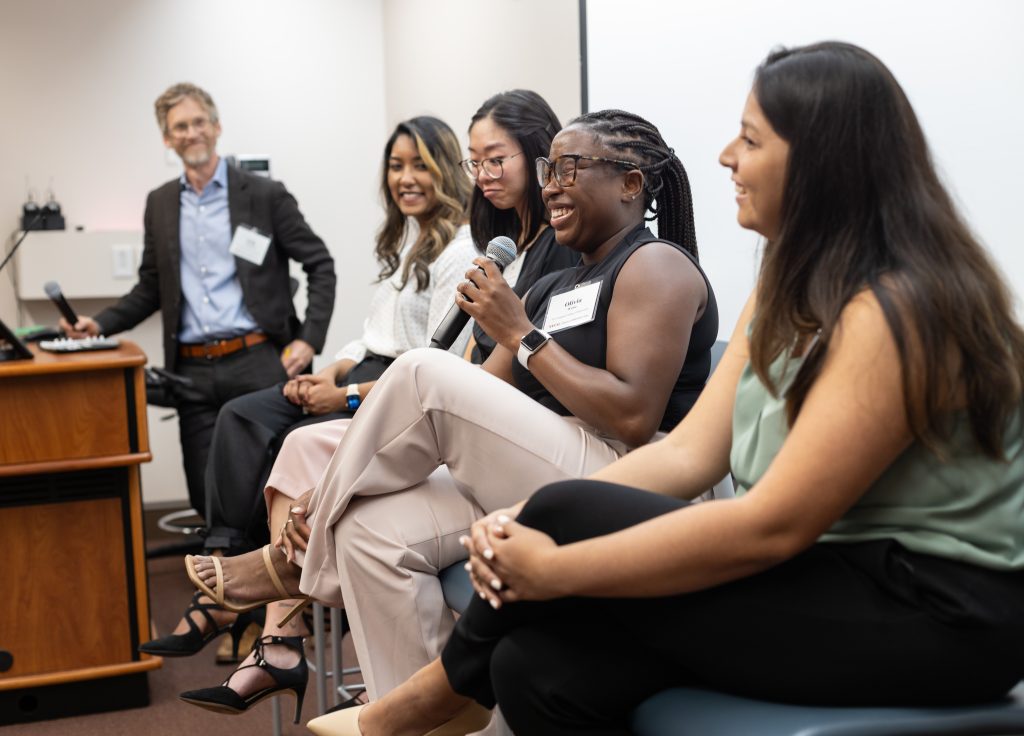
The first night’s student panel featured (left-right) moderator Dr. Erik Weisberg, Carissa Fleming OD 2025, Tia Vuu OD 2025, Olivia Wynn OD 2026, and Michelle Vaca OD 2026.
NECO President and CEO, Dr. Howard Purcell, shared his concerns about the impact the recent Supreme Court ruling overturning affirmative action will have on eye care. “While NECO will absolutely adhere to the law, we also remain committed to continue to close the gaps for optometrists of Black, Latino, Indigenous, and other under-represented people in optometry so we can best meet the needs of patients,” said Dr. Purcell.
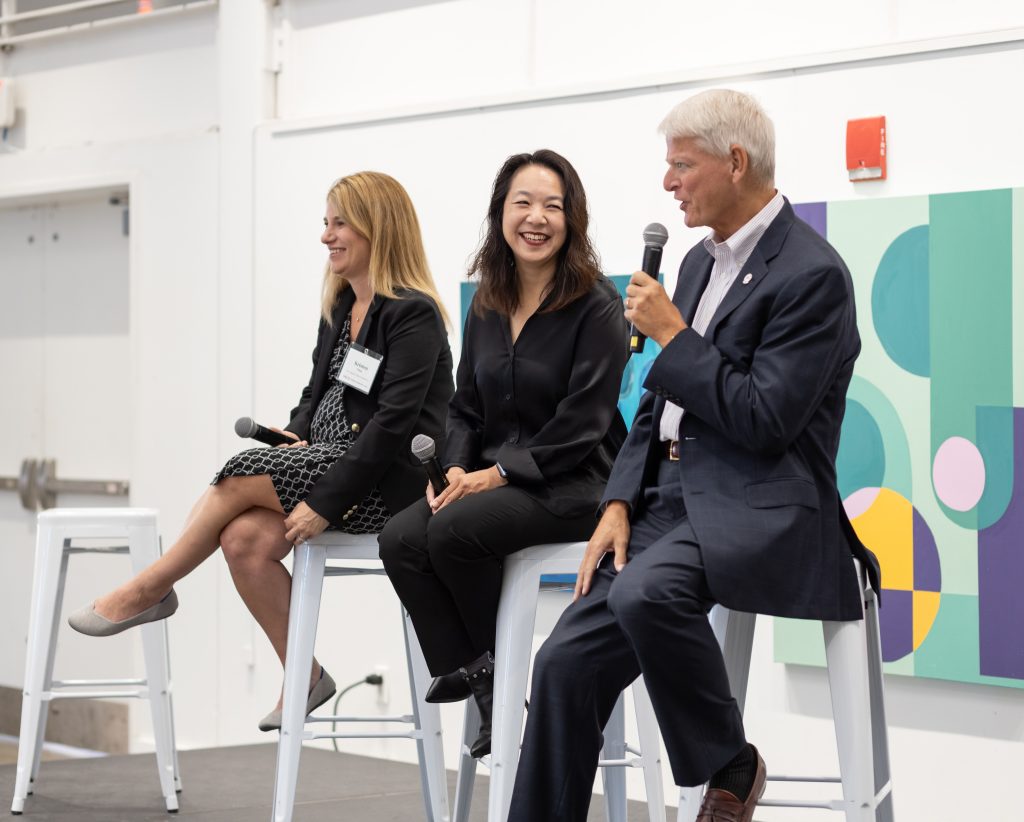
Day two started with “Admissions to Graduation,” featuring (left-right) NECO Associate Dean of Student Affairs Kristen Tobin, Dr. Susy Yu Director of Strategy and Operations at Vision Essentials by Kaiser Permanente and board member of the National Board of Examiners in Optometry, and ASCO President Dr. Mark Colip.
The event included two student panels, one for students early in their academic journey and a second panel of students in the final years of their education, residency or early in practice. A third panel pursued the topic of admissions to graduation, covering applicant pool expansion, board exams, and the quality, quantity, and diversity of students applying to optometry schools today.
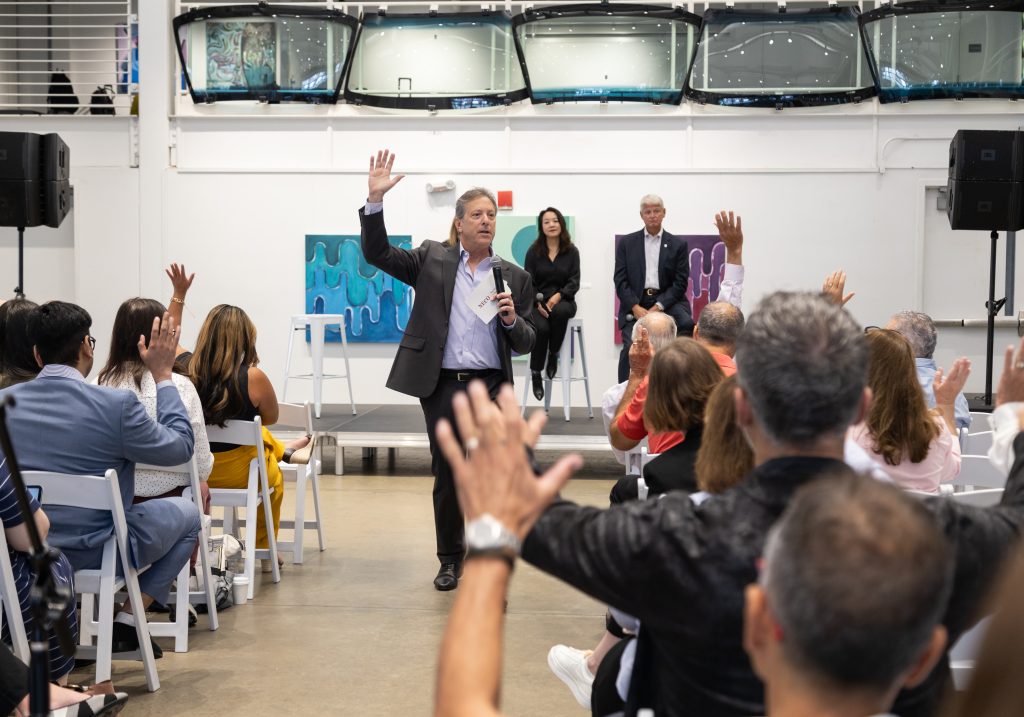
Dr. Howard Purcell asks the audience who believes there are not enough optometrists in the world.
The final panel of the event pursued the potential of telehealth to address the gap between supply and demand for eye care. At last year’s Industry Collaborative, the debate was focused on refraction and telehealth. Dr. Chu said, “There was quite a bit of tension as we debated the topic last year. This year, the discussion centered around imaging vs. dilation in telehealth and the responsibility in leveraging technology to deliver care that is appropriate to meet the demands of while ensuring accessibility.” The American Optometric Association rewrote their position statement regarding telemedicine in optometry in October 2022. There is no doubt telemedicine will be one of the tools to help address the increasing demand for eye care.

Second student panel featuring (left-right) Zach Jost OD 2021, Sara Masood OD 2024, Jackie Kenney OD 2023, and Marilyn Tran OD 2024.
Several other topics were addressed including mentorship, student debt, scholarships, the breadth of careers for Doctors of Optometry, business acumen, mental health, opioid addiction, food insecurity, license portability, and the need for rural optometrists. NECO will further explore these topics with students and industry professionals over the coming months as we see this as one way to fulfill our mission to Change the Way People See the World.
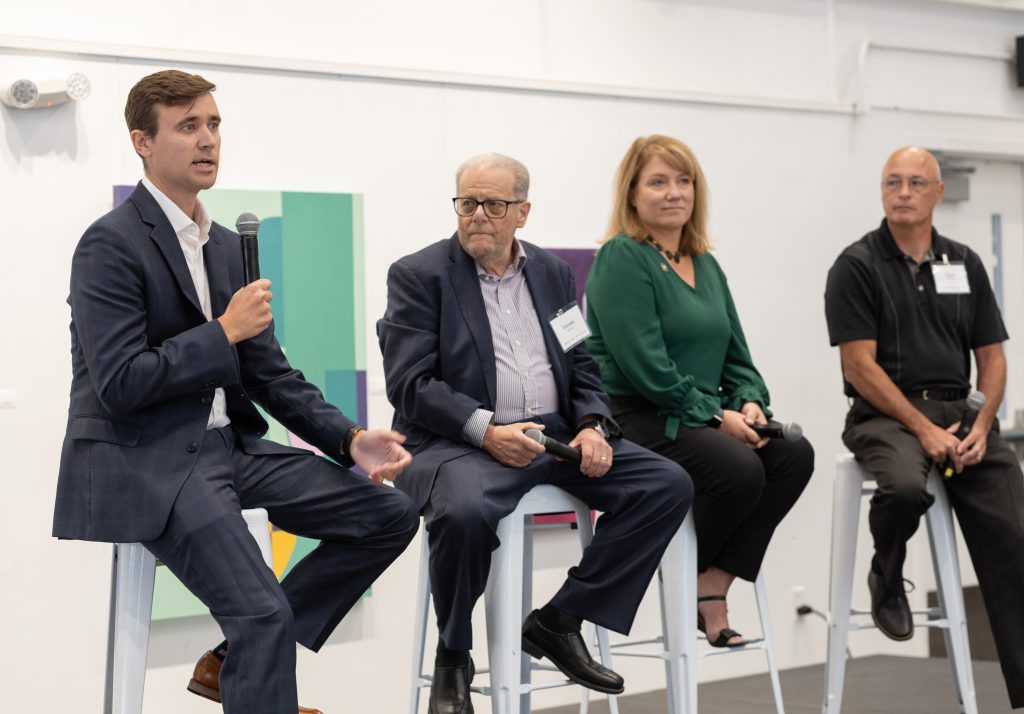
Last panel of the event covered Teleretinal Imaging vs. Dilation and featured Dr. Chad Overman, COO of 2020 NOW; Dr. Terri Gossard, AOA Trustee; Tom Mann, American Telemedicine Association; and Dr. Gerald Selvin, Past Director of National Ocular Telehealth