NECO Hosts Fourth Annual Industry Collaborative
The Fourth Annual Industry Collaborative focused on eye care’s imbalance in health equity and how such inequities impact the patient, the student, and the doctors practicing in the field of optometry.
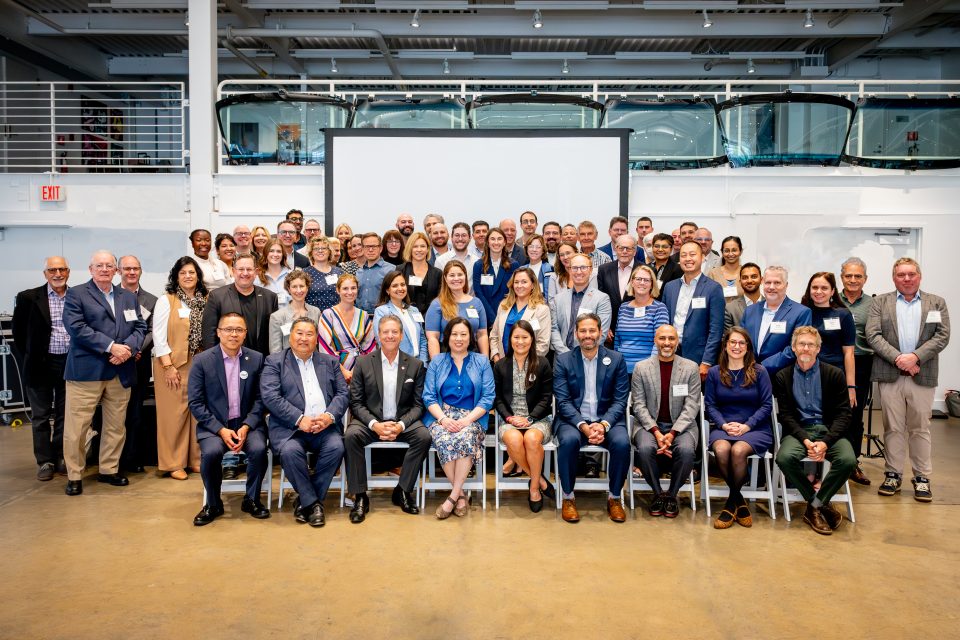
The New England College of Optometry (NECO) welcomed 100 guests from the eye care industry, professional organizations, health care, academia, and media to the Beacon Street Campus on September 9 and at Artists for Humanity on September 10 for the fourth annual NECO Industry Collaborative. The event fosters connections, debates, and discussions about the challenges of health care equity in eye care and optometric education.
Dr. Howard Purcell, NECO, President and CEO ; and Dr. Gary Chu, Vice President for Professional Affairs, welcomed guests and opened the Collaborative by underscoring the central goal: despite the challenges facing health care systems, the needs of our patients and students remain the same – Helping people see the world differently.
“There is a dire need for medical eye care, but the number of eye doctors has remained nearly flat or even dipped,” said Dr. Chu. “With such shortages, the inequities of eye care have only worsened.”
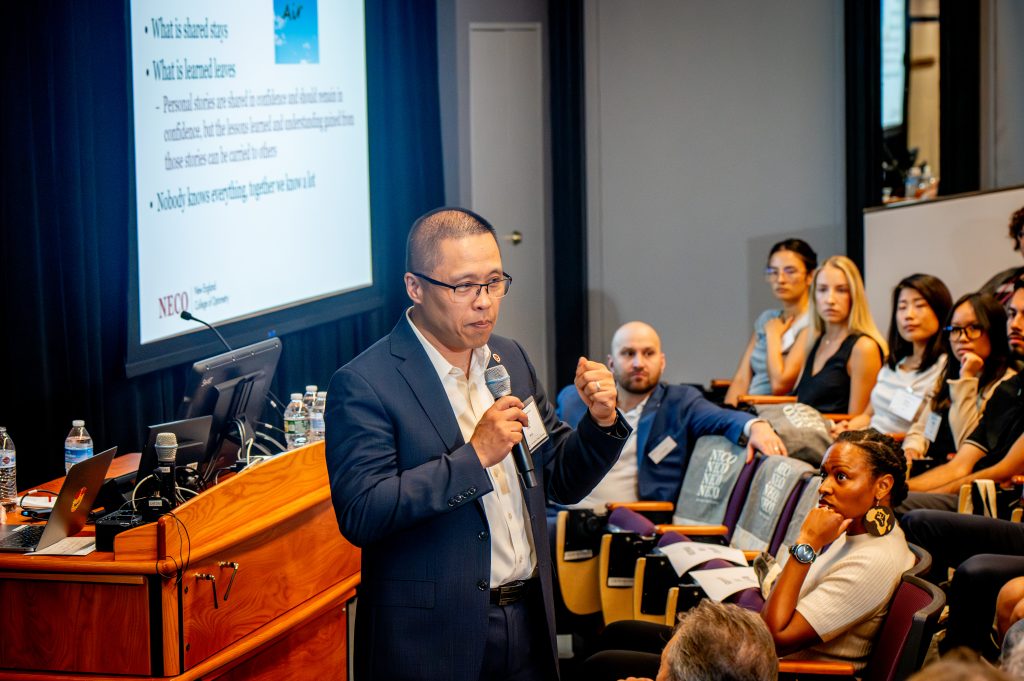
The first featured speaker of the event was Dr. Richard Edlow, the “Eyeconomist”, who presented engaging data during his “Eye Care Disruptions & Opportunities” discussion. He highlighted an impending crisis, “the need for eye exams will increase by 55%, while the number of optometrists will increase by less than 10% and ophthalmologists will increase by only 0.5% per year.” This imbalance only worsens the inequity in care that patients experience. The widening gap of care will continue to disproportionately impact patients already marginalized by the healthcare system.

The discussion then turned to the challenges of optometric education with a panel moderated by Dr. Erik Weissberg, Dean and Vice President for Academic Affairs, along with OD3 student Ashlee Payne, and faculty members Dr. Bina Patel and Dr. Jennifer Riley. A “Day in the Life” video showcased the daily lives of optometry students, the hurdles they encounter when pursuing an education, and the formal and informal support structures that exist at NECO.
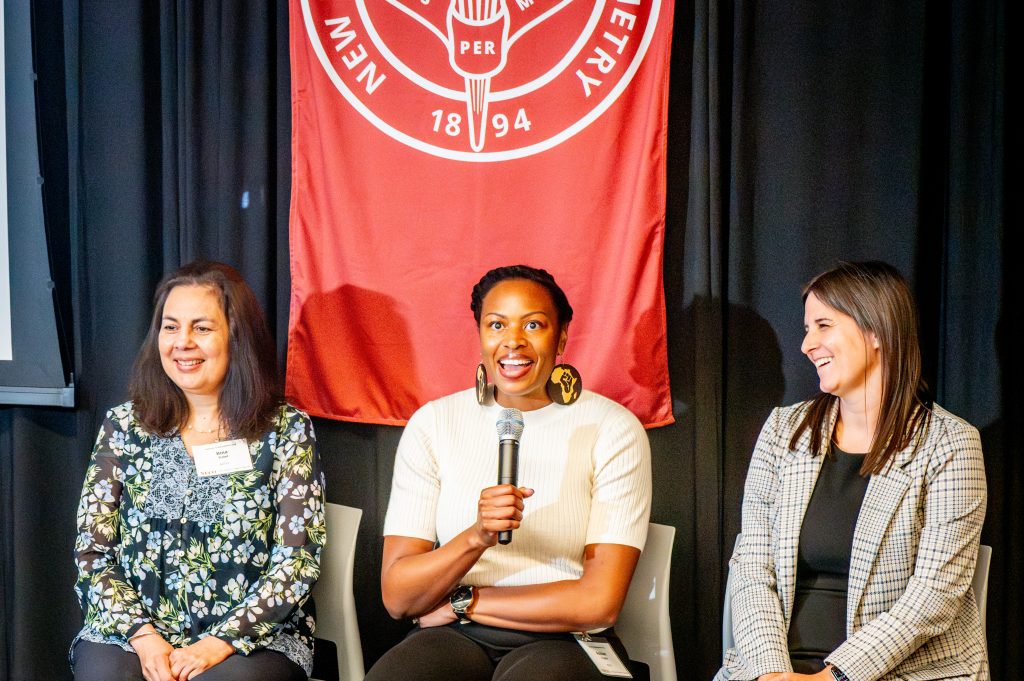
In the video, Ashlee Payne reflected on her journey, noting, “One of the main reasons I chose to come to NECO was the admissions team’s genuine interest in me. They valued my professional experience, even though my academic record didn’t fully translate in my application.”
Faculty members also echoed the same approach to teaching the whole student, and not just the curriculum. Dr. Jennifer Riley emphasized the rigorous academic commitment these students take on. In reviewing her own curriculum for the Principles and Practice of Optometry course, Dr. Riley actively considers the total content her students are digesting across their course load.
“When is it too much? When do they max out on their cognitive load?” She presents, “My colleagues and I continuously adjust and adapt our content and course pacing on student feedback, which improves both the learning experience, outcomes and the overall course. A recurring theme that emerged throughout the event was the question of, “how will educational institutions better teach and prepare future optometrists to fill the practice gap that Dr. Edlow presented?”
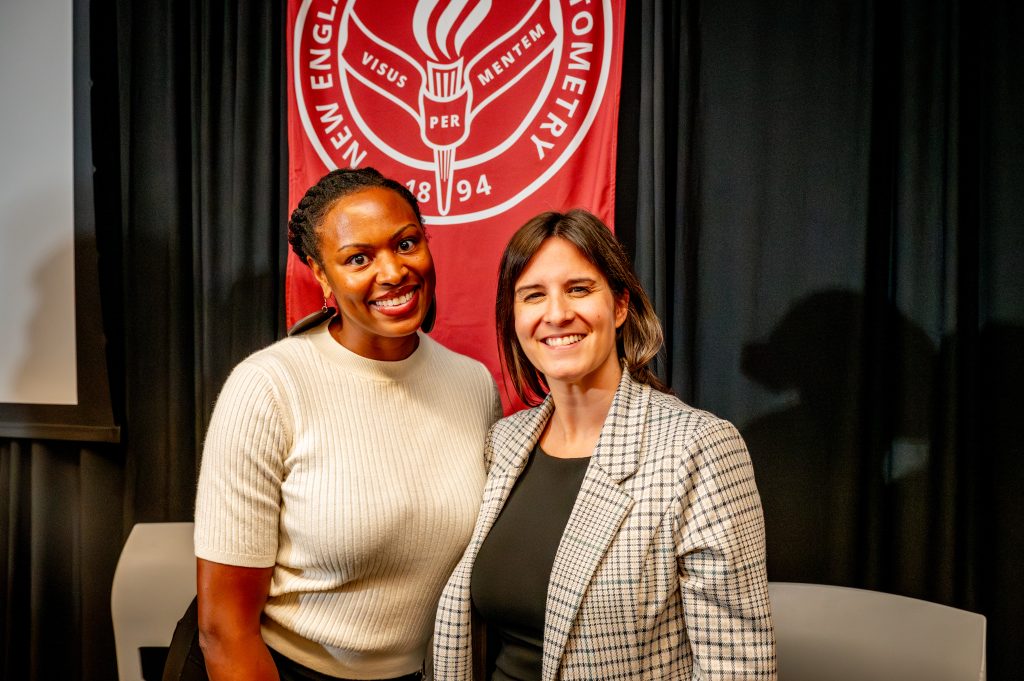
Dr. Erik Weissberg, NECO’s VP and Dean of Academic Affairs, presented the dichotomy of such a problem. “Individuals will need to greatly alter the way they practice if they’re going to close that gap,” he shares. “Technology plays a large role in improving that gap, but it can also foster further inequities for clinics that are poorly funded, as they won’t be able to afford the latest technologies. And if we consider phasing out ophthalmoscopy or retinoscopy, then another provider may get that job where a certain clinic can do an ophthalmoscopy. So it can go both ways.”
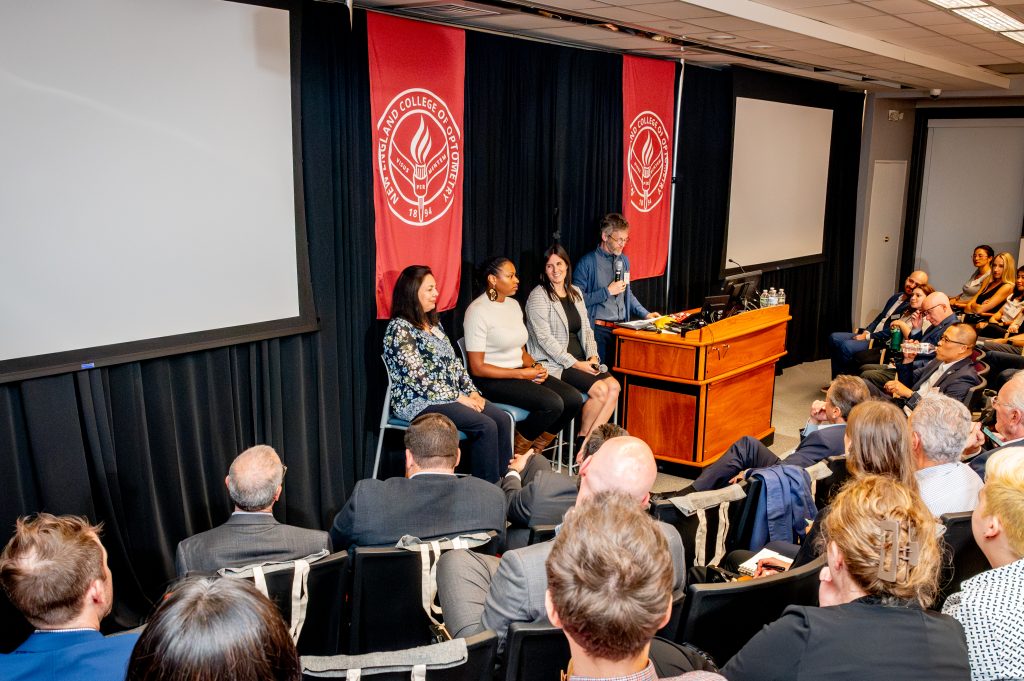
He adds, “I think what restricts academic institutions is that we have to teach so our students can pass the national boards. We need to prepare them to properly take these exams, how to think about them, and how to analyze them. They have to understand what ancillary tests to order, when they get what information and what step to take next. We would hamper their testing if we get too out there, it could be difficult for them to get licensed.”
Day two was held at Artists for Humanity and started with “Artificial Intelligence (AI) and Education,” featuring John Katzman, Founder and CEO of Noodle and NECO’s CEO and President Dr. Howard Purcell. The pair discussed how AI is being used to alter healthcare organizations and education for practitioners. As the development of AI has progressed, certain groups like Noodle see the challenge that students face in paying for education and the challenge that organizations face in filling open roles as an opportunity to utilize AI networks to combat these challenges that further the inequities in eye care.
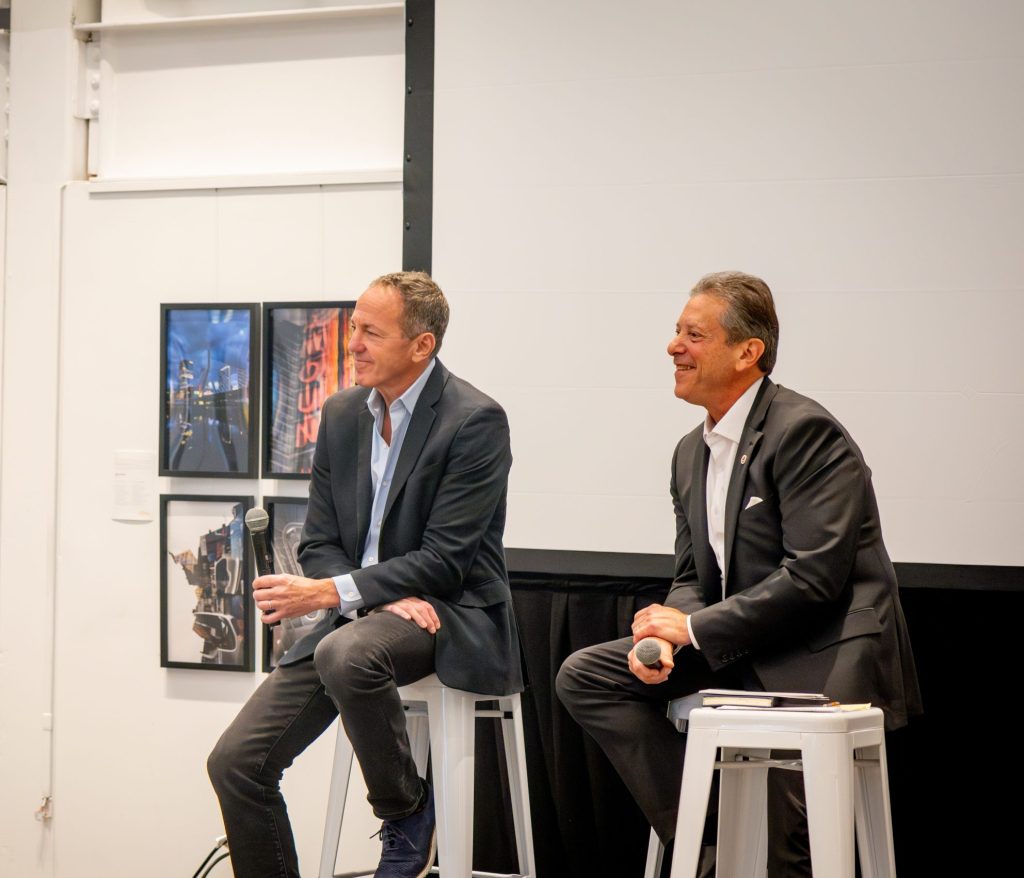
“If a hospital is willing to pay for people’s education, they want to know that these practitioners will stay and work for three years,” describes Katzman. “If the practitioner leaves right after their education is paid off, the hospital ends up forgiving the money. Because of this, hospitals keep these programs very, very small.”
He continues, “The risk for the student interested in going into healthcare is they don’t want to take on the school debt. But, they may not see the appeal of having their education sponsored if they aren’t able to work where they want.”
“I believe you can mitigate such risk through streamlining technology and AI platforms. Companies can use networks to de-risk it for everybody. You can simplify that process of receiving an education and then filling an open role by finding and onboarding practitioners through paying for education in a thoughtful way that has no risk to the students and no risk to the company.”
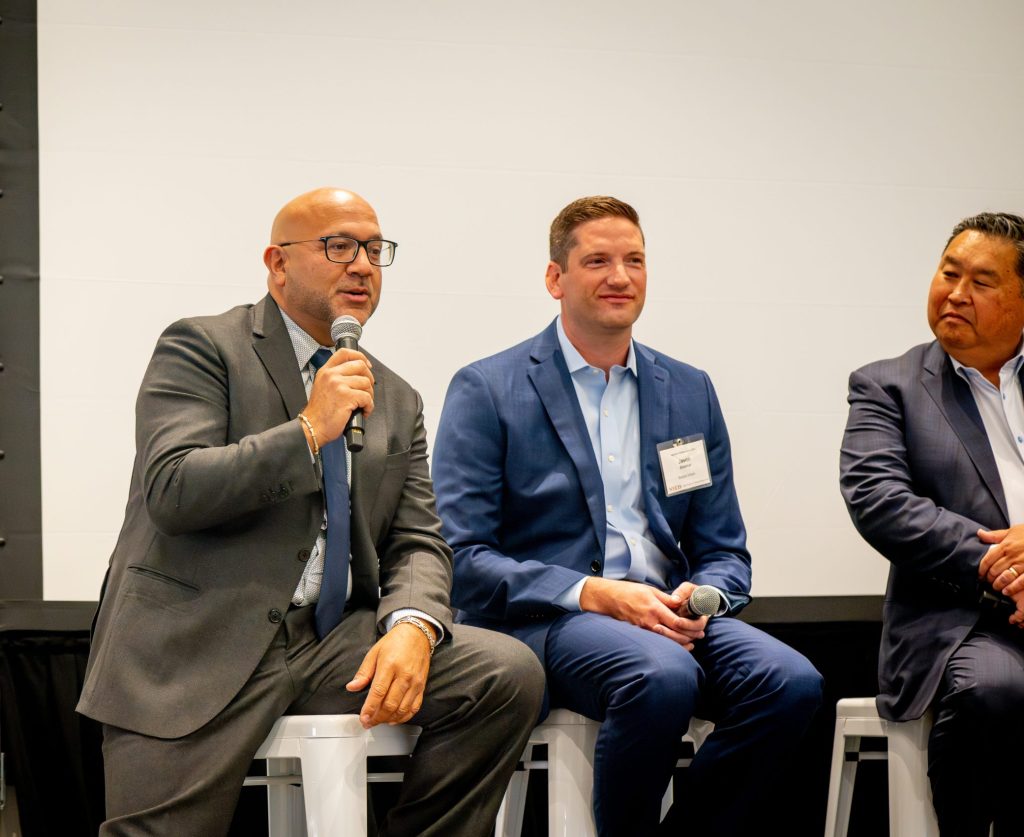
Following the AI discussion, Dr. Chu welcomed five panelists to the stage to debate “Scope of Practice” and how inequities in care are influenced by regulation of practice for some providers. The panelists included Dr. Jason Brenner from Boston Vision, Dr. Diane Russo from NECO, Dr. Curtis Ono of the AOA, Jeffrey Sanchez the former Massachusetts House Representative for the Suffolk 15 District, and Dr. Monica Vohra of DotHouse Health. Their lively discussion covered many areas of healthcare, including the cost burden for patients accessing specialty care outside of their network and the low number of practitioners able to provide such care.
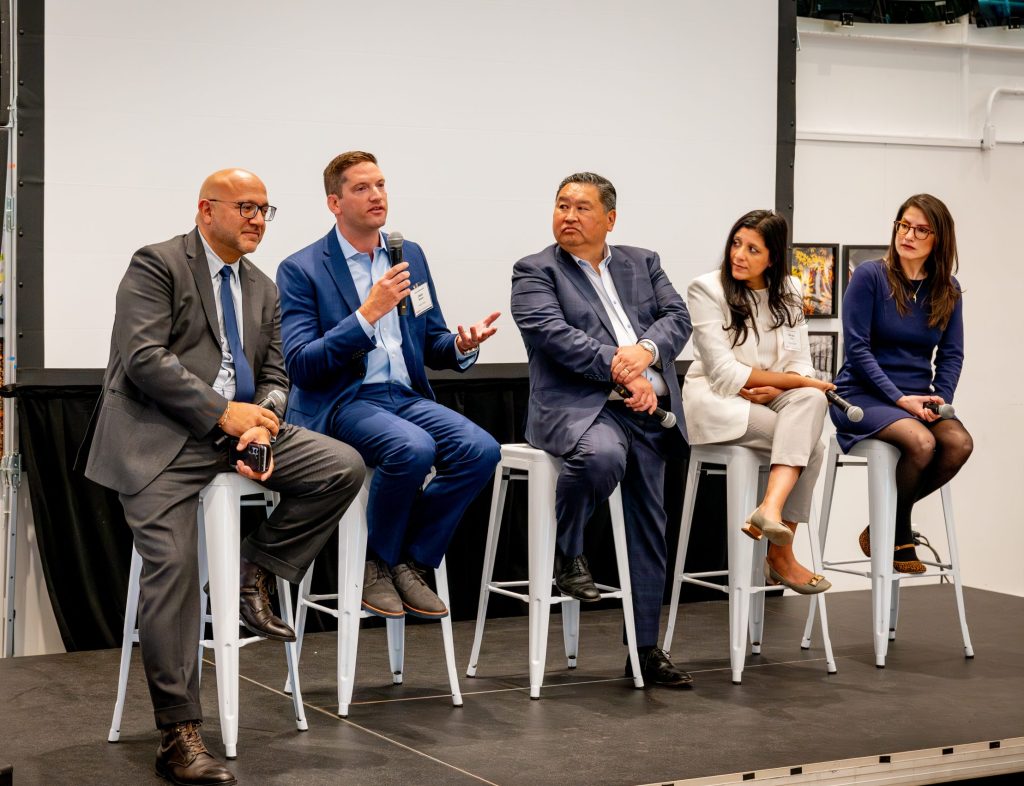
“I work in an MD and OD practice,” shared Dr. Brenner. “I really believe that is the best model because it allows both patients to navigate the system better, and optometrists to continue to learn from their colleagues about surgery. This type of collaborative environment is a really good avenue for scope to increase, because there’s support there when you need it.”
The healthcare system presents complexities that patients are sometimes more familiar with than their doctors. “We have to work in the system and adapt to it,” explains Dr. Brenner. “I don’t love this model of practice, like many of you here, but I think if it’s done well and done safely, then doctors can adapt their practice to meet the needs of the patient. I would like to see the MD/OD model expand into things like retina neuro-ophthalmology glaucoma, where many people have trouble accessing a cure because there’s a huge shortage of glaucoma surgeons in Boston.”
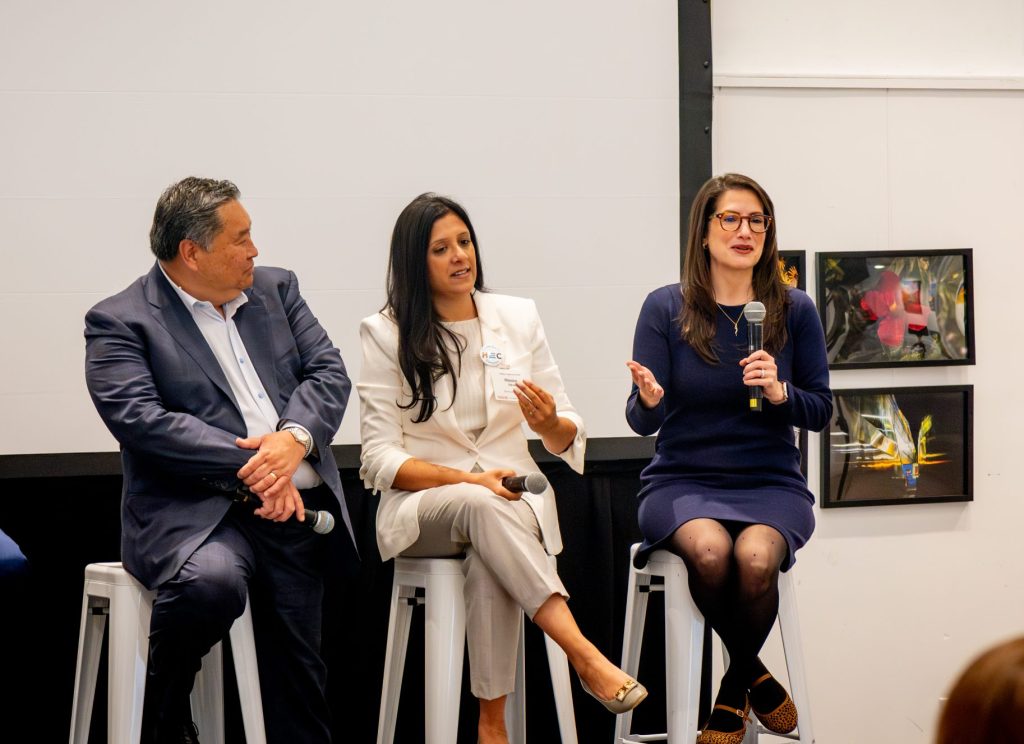
Dr. Russo added, “The politics and interpersonal relationship between optometry and ophthalmology is trivial in the eyes of our patients. It’s the healthcare system that they have to navigate and it’s the system that creates healthcare disparities.”
While healthcare disparities were discussed, Representative Sanchez described this in a different light: What the health outcome should look like. “When I think about equity, I think about health outcomes. And ultimately, there should be no difference in health outcomes because of your financial standing, race, ethnicity, or any other variation. Everyone should have the same health outcome.”
After a brief break, the audience returned to hear “Rapid Fire Q&As” that highlighted how partnerships with colleagues from different professions positively impact eye care and how overall healthcare is improved. Dr. Chu invited Dr. Carlos Cappas, Chief Behavioral Health Officer at Lynn Community Health Center, who explained how the partnership between mental health and eye care has greatly improved student experience and family engagement.
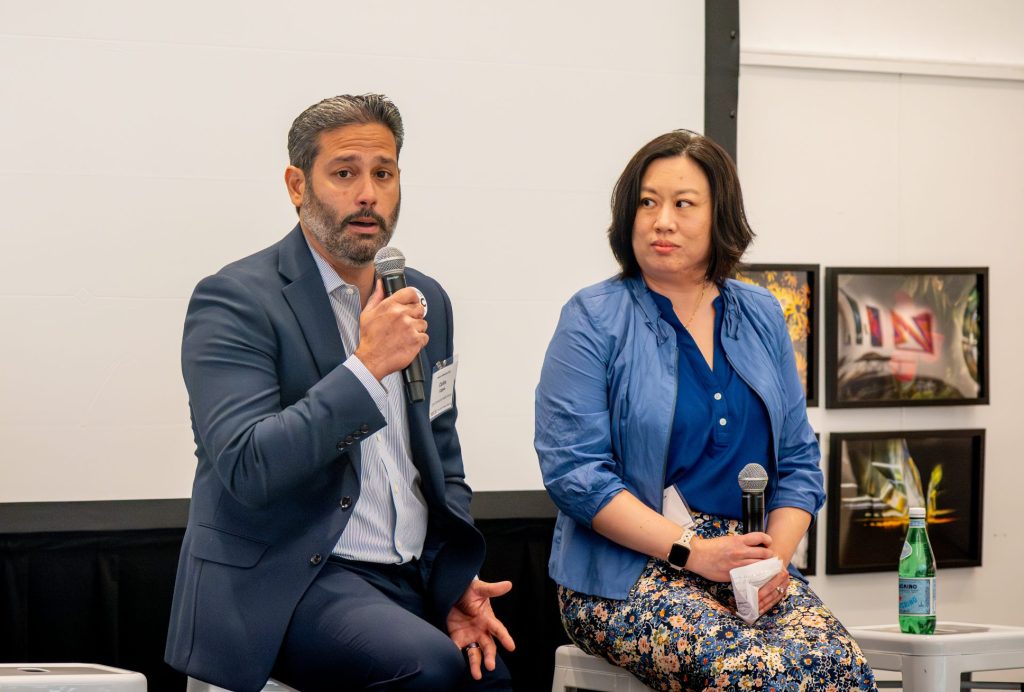
“In Lynn, we have organized and implemented school-based health centers with primary care, medical services, and behavioral health services,” describes Dr. Cappas. “Because of the work and partnership with NECO’s Dr. Bastian, myself and others within the school system understand that a lot of the visual problems that are now being found in kids were often previously seen as behavioral issues.”
The new collaborative that Dr. Cappas and Dr. Bastian have created is one solution to inequities and systemic problems. “We considered some of the regulatory issues and processes that could be streamlined because Lynn Community Health Center was already in the schools providing care. The issue for us to solve was how we work together to provide appropriate screenings and ensure that students and families have access to services. One of the things that I look forward to working on is enhancing the integration and interprofessional training for all providers.”
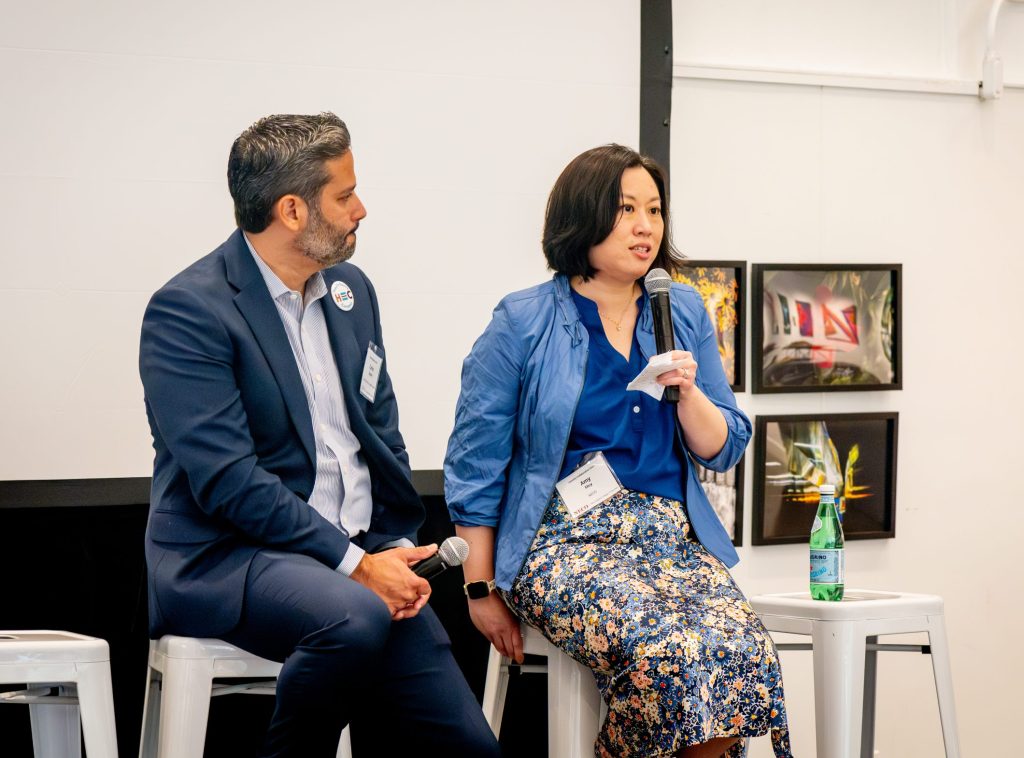
Dr. Amy Moy of NECO presented data that showed the need to further integrate interprofessional care into schools. “595 Boston Public School students received eye exams last year. But 39.8% of them failed their vision screenings. And the prior year, out of 826 students, 45.6% failed. You can see why this is a huge problem, and if we can address it early on in a sustained fashion, then we are really investing in their future school performance and quality of life.”
Dr. Moy shared a story of a young patient with functional vision loss and found their temporary blindness was actually caused by recent upheavals in their life. She shared her findings directly with the patient’s primary care doctor and mental health therapist. “This process of speaking directly to the patient’s healthcare team at Martha Elliott saved this family time and money because of better communication and more effective treatment plans,” she shared. “This simple action is one way to ensure eye care for all.”
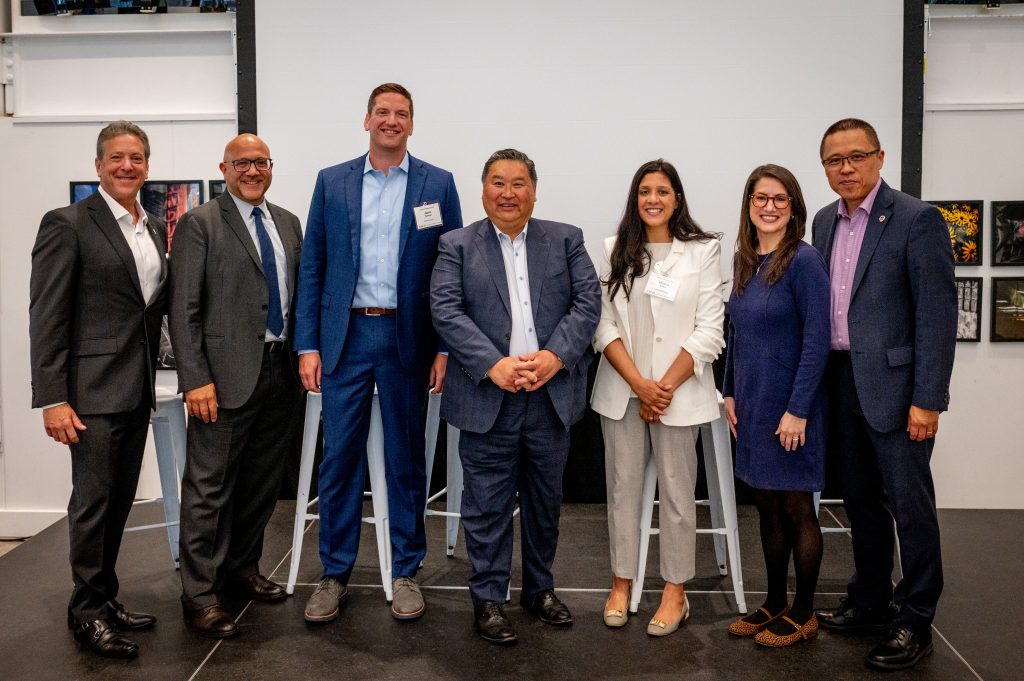
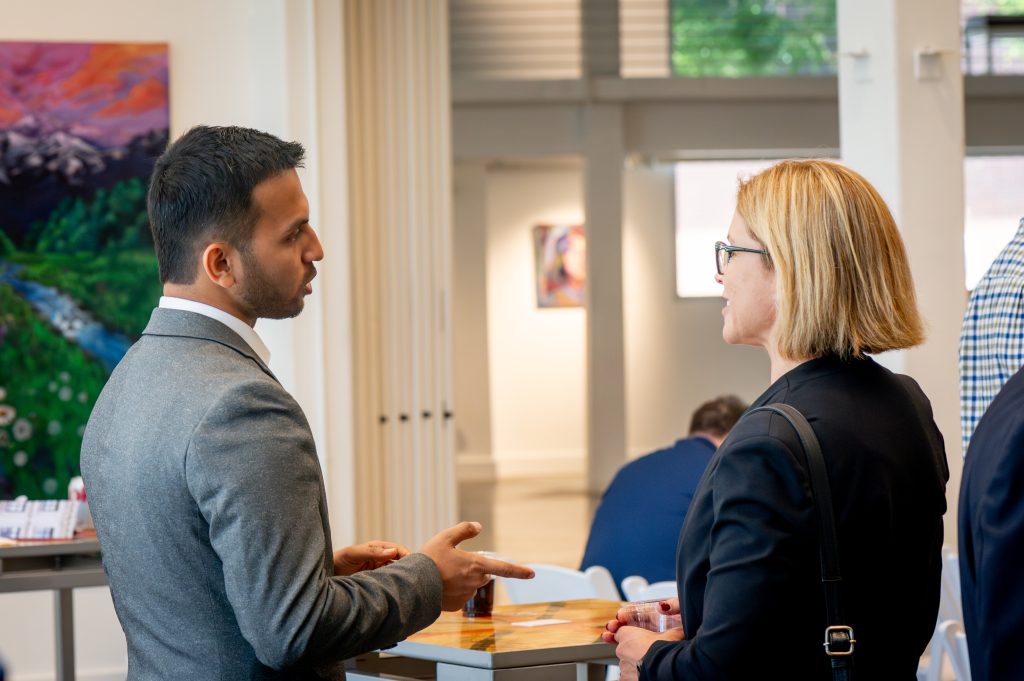
After the speakers finished, attendees had the opportunity to network and continue the discussion one on one. For over an hour and a half, attendees continued debates and found connections that may start the process of improving certain inequities in eye care. NECO and our many industry partners continue to explore and discover new ways of overcoming inequities to not only provide momentary relief, but to improve the overall system from which these inequities grow. Whether students struggle to balance personal and academic life, or providers are not able to treat certain conditions, inequities in eye care affect everyone. This year’s Industry Collaborative brought to light issues to resolve, and how individuals in the field have taken steps to improve and ensure eye care for all.