



Contact Lenses: A Guide to Safe Wear and Care
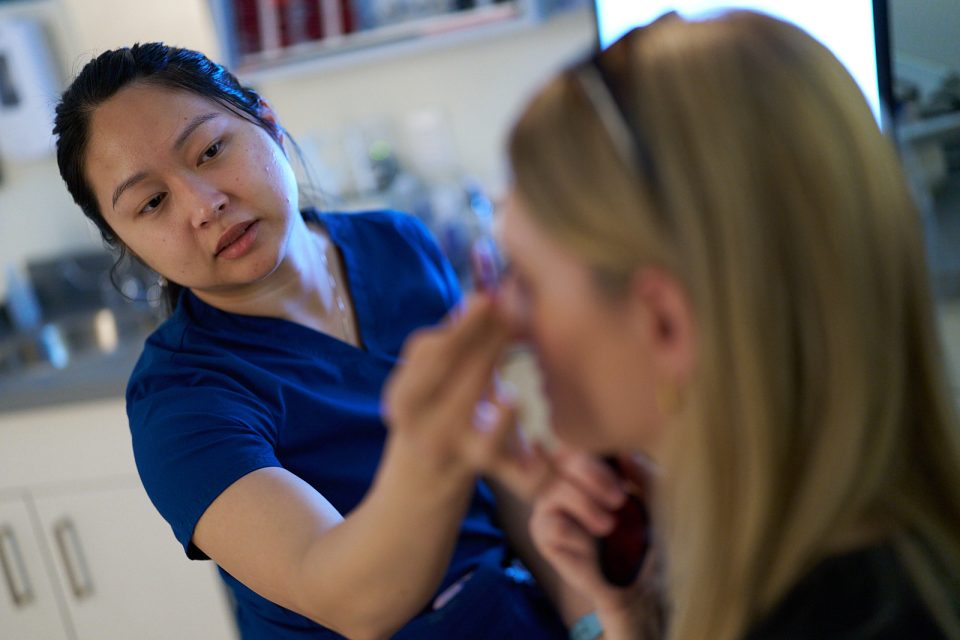
Contact lenses offer a convenient alternative to some traditional eyeglasses, providing clear vision without altering your appearance and in some cases treating ocular conditions. Maintaining proper hygiene, care and wear habits is crucial to maintain eye health and prevent complications associated with contact lens wear.
The New England College of Optometry (NECO) Center for Eye Care (NCEC) offers contact lens services and education to both new and existing contact lens wearers. We fit a wide range of contact lenses including specialty lenses such as scleral contact lenses and orthokeratology lenses. Additionally, our doctors provide education to healthcare professionals about the benefits of contact lens wear with certain patients or ocular conditions.

Types of Contact Lenses
There are several types of contact lenses available, each suited to different needs:
- Soft contact lenses: Soft contact lenses are the most common type of contact lenses worn by patients. They can be replaced daily, biweekly or monthly, depending upon patient preference and the goals associated with contact lens wear.
- Spherical lenses: Designed to correct basic prescriptions.
- Toric lenses: Designed to correct astigmatism.
- Multifocal lenses: Designed to correct both distance and near vision for patients.
- Rigid Gas Permeable (RGP) contact lenses
- Specialty contact lenses: Specialty contact lenses including scleral contact lenses are designed for specific eye conditions or unique visual needs that standard lenses may not address.

Getting Started
To start wearing contact lenses, schedule an appointment with a NCEC optometrist. The optometrist will perform a comprehensive eye exam and fit you with contact lenses that meet your specific needs and visual goals. Your eye care professional will determine the appropriate lens type, size, and prescription for you and will provide instructions on insertion, removal, and proper care techniques.

“Contact lenses can be a great option for treating the visual needs of all my patients,” shares Dr. Phyllis Andrejko, Attending Optometrist at NECO Center for Eye Care at Roslindale and Assistant Professor of Clinical Optometry. “Although not an option for everyone, many can benefit from discussing the potential benefits of contact lenses.” She continues, “For some, it is the best option, while for others they can be a secondary leisure option. In all cases, it is important for my patients to understand that contact lenses are medical devices, requiring proper wear and care as well as follow ups for best outcomes”
Caring for Your Lenses
Proper lens care is essential to prevent eye infections and ensure optimal vision:
- Wash your hands thoroughly before handling lenses
- Clean biweekly or monthly lenses daily with a recommended solution
- Never use tap water or saliva to clean contact lenses
- Clean your contact lens case daily and replace the case every month
- Follow the recommended replacement schedule for your specific lens type
Ordering Prescriptions
Contact lens prescriptions typically expire after one year. To renew or obtain a new prescription:
- Schedule an annual eye exam with your optometrist
- Discuss any vision changes or concerns during your appointment
- Request a copy of your updated prescription
- Order lenses from a reputable source, such as your eye care provider or a licensed online retailer
Recognizing Complications
Be aware of potential signs of complications, which may include:
- Redness, pain, or irritation in the eye
- Blurred or decreased vision
- Sensitivity to light
- Excessive tearing or discharge
If you experience any of these symptoms, remove your lenses immediately and contact an eye care professional.

When to Visit an Optometrist
Schedule an appointment with your optometrist if:
- Your annual contact lens prescription is expired or nearing expiration
- You experience any ocular symptoms that include discomfort or vision changes
- You notice any signs of contact lens complications (listed above)
- It’s been more than a year since your last eye exam
Regular check-ups ensure your prescription remains accurate and your eyes stay healthy.
By following these tips and maintaining open communication with an optometrist, you can enjoy the benefits of contact lenses while minimizing potential risks. Remember, your eye health is important for your overall health, so find the right eye care professional to treat and assess all your vision needs.

