

Bedside Manner Tips for Optometrists

In the world of healthcare, technical knowledge and clinical skills are only part of what it takes to be a good doctor. The interpersonal skills that create strong bedside manner are just as important as technical and clinical skills. Whether treating patients from a hospital bed or in an office; communication, empathy, and conflict resolution are key to any patient interactions. At New England College of Optometry (NECO), students receive specialized training to handle challenging situations with confidence and professionalism, ensuring they are well-equipped to be great doctors. Tips for optometrists–or any practitioner–include understanding the patient’s perspective, confident and effective communication, and emotional and cultural intelligence.
Communicate, Connect and Care
For optometrists, training in bedside manner often begins when they are still students. NECO faculty members recognize that managing any patient experience requires more than just textbook knowledge. That’s why the curriculum highlights the importance of clear communication, compassion, patient comfort, and a keen understanding of body language to teach students how to effectively navigate any interaction.
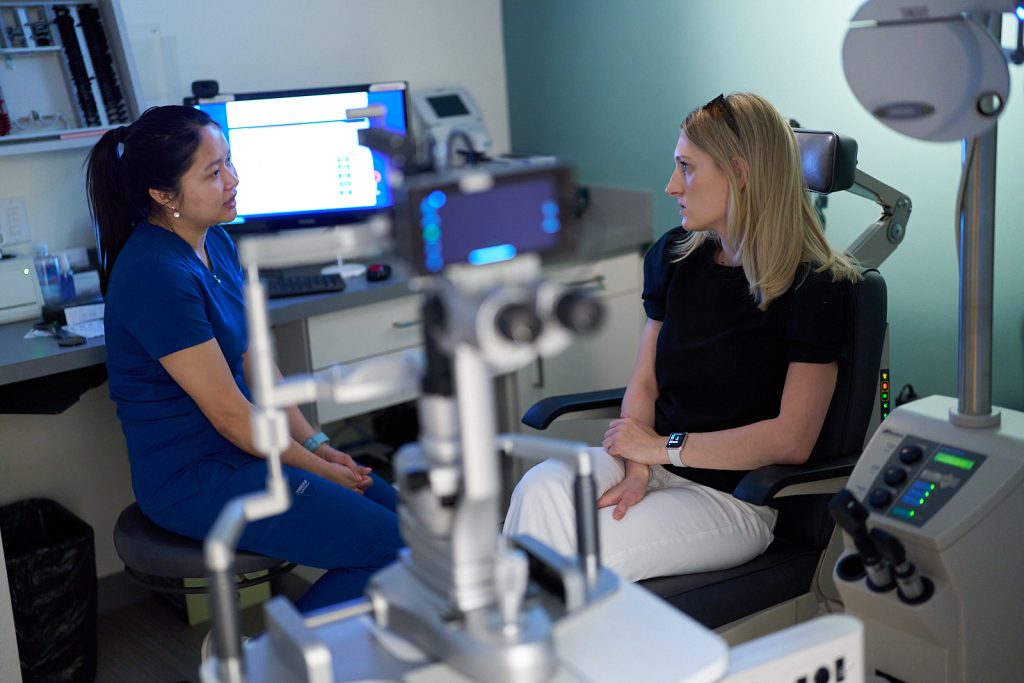
One of the key components of NECO’s approach is communication training. Students learn techniques in empathy-driven responses, and clear and simple explanations to foster trust and connection. Techniques like understanding a patient’s concern or validating their emotions are ways to diffuse any situation and promote effective treatments for the patient. It’s important to avoid using medical jargon when possible to help the patient understand their diagnosis and treatment plan.
For students at NECO, they will receive this training before they enter a clinical setting and see a patient. However, once in clinic students still work closely with faculty and are fully supported in any patient interaction.
Making the Whole Experience Better
NECO’s robust clinical training ensures students gain practical experience early in their education, including “bedside manners.” Through partnerships with community health centers, private practices, and VA hospitals, students interact with diverse patient populations, including those who may be experiencing financial hardships, mental health challenges, or patients with difficult family situations. Becoming an optometrist starts with classroom training, followed by real-life patient interactions, to learn how to handle difficult situations with professionalism and compassion. This real-world exposure helps students build resilience and adaptability, two critical traits for any healthcare provider.

Understanding how cultural backgrounds, beliefs, and personal experiences shape a patient’s perspective allows future optometrists to provide more personalized and respectful care. NECO students participate in workshops and discussions on cultural sensitivity and emotional intelligence. They learn how to navigate language barriers, respect different health beliefs, and ensure that all patients feel heard and valued. This training is essential for building strong doctor-patient relationships and improving understanding of treatment recommendations.
Difficult patient interactions are an inevitable part of healthcare, but at New England College of Optometry, students receive comprehensive training to navigate these challenges effectively. Through communication skills development, hands-on clinical experience, and cultural competency training, NECO ensures that its graduates are prepared to provide compassionate, patient-centered care—no matter the situation.
By equipping students with these essential skills, NECO continues to uphold its commitment to excellence in optometric education, producing future leaders who can confidently and empathetically serve their patients.