

What is Gonioscopy?
Gonioscopy is a specialized eye test that allows optometrists and ophthalmologists to evaluate the drainage system of the eye—an area critical to maintaining proper eye pressure and overall ocular health.
At New England College of Optometry (NECO), we emphasize the importance of this technique not only in diagnosing eye conditions such as glaucoma but also in training future optometrists and eye care specialists to provide comprehensive, patient-centered care.
How does Gonioscopy Work?
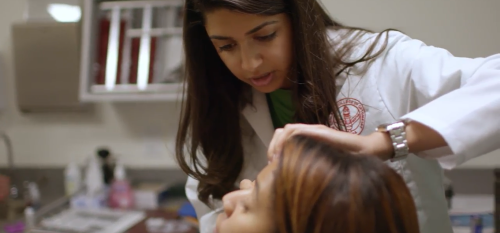
Gonioscopy involves the use of a special contact lens, called a gonioscope, that gently rests on the eye. This lens contains mirrors that reflect light from the drainage angle so that the clinician can examine it through a slit lamp (a high-powered microscope with a light source).
The method is used to directly visualize the eye’s drainage angle, making it a vital tool in the detection and management of various forms of glaucoma.
Let’s get Technical
Inside the eye, a fluid called aqueous humor is produced to nourish tissues and maintain eye pressure. This fluid must drain properly through a structure called the anterior chamber angle, located between the cornea and the iris. If the angle is too narrow or blocked, fluid can build up, leading to increased intraocular pressure—a key risk factor for glaucoma, a group of eye diseases that can cause vision loss.

Gonioscopy helps differentiate between open-angle and angle-closure glaucoma, each of which requires a different treatment approach. In some cases, abnormal tissue or injury can affect the angle, and gonioscopy can help identify these issues. This type of technique, and the many others, that eye care professionals utilize not only serve the patient in living fuller lives, it also is why people become ophthalmologists in the first place.
Gonioscopy plays a key role in the early detection and management of glaucoma and other eye conditions affecting the drainage angle. If you or a loved one is at risk for glaucoma, especially if you have a family history of the disease or are experiencing symptoms such as eye pain or blurred vision, a comprehensive eye exam including gonioscopy could be vital.
For more information or to schedule an eye exam, visit necoeyecare.org.