
Understanding What the Eyes See When the Brain Can’t

Imagine being able to see the world around you, but your brain can’t make sense of what your eyes are taking in. That’s the daily reality for individuals living with Cerebral Visual Impairment (CVI), the leading cause of vision loss among kids in the United States (NEI.GOV). Despite its complex symptoms, CVI remains one of the least understood or recognized conditions in the medical and educational fields.
For many children, and some adults, CVI can be hard to diagnose because the eyes function normally and vision exams won’t necessarily detect any issues. For example, a student may be able to physically see letters on the board, but they struggle to visually process and recognize those letters and become overwhelmed during visual tasks.
“Parents often face significant challenges in validating their concerns about their child’s vision,” explains Lacey Smith, CVI Parent Community Manager at Perkins School for the Blind. “The disconnect between what medical tests show and how a child functions in daily life can lead to years of confusion and missed opportunities for support.”
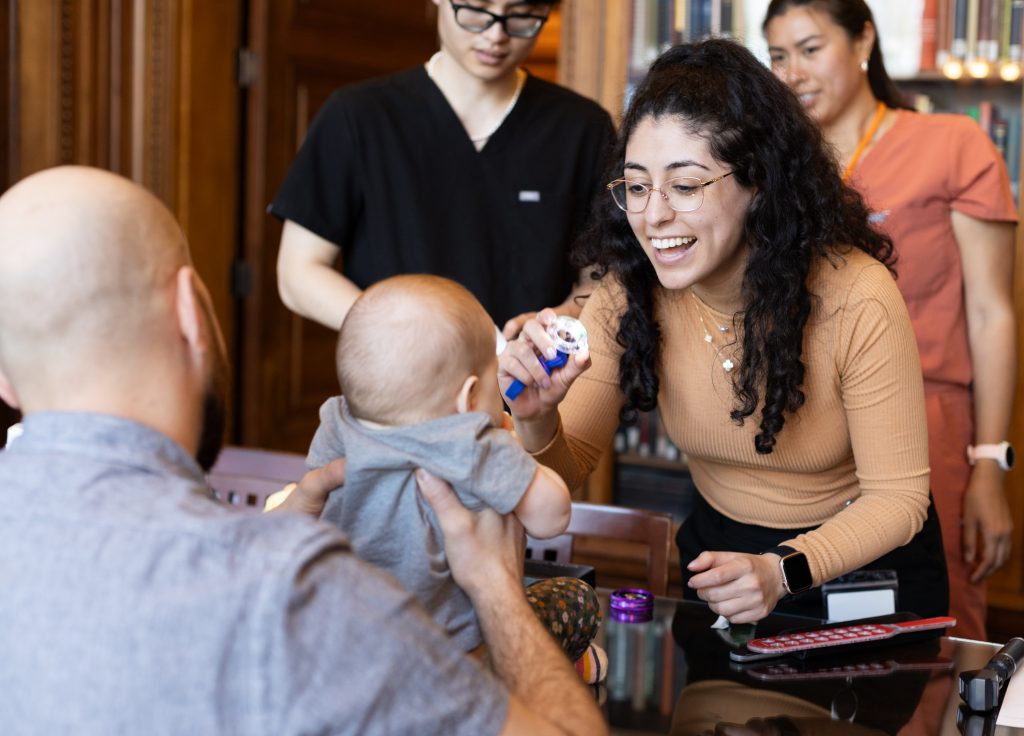
This disconnect highlights the critical need for greater awareness and understanding of CVI: a brain-based visual impairment that affects how visual information is processed and interpreted, rather than how it’s received by the eyes.
In a recent conversation with experts from the CVI Center at Perkins, we explored the complexities of CVI, its impact on individuals and families, and the collaborative approach needed to properly identify and support those affected by this often-misunderstood condition.
Perkins holds a central position in addressing the complexities of CVI, serving as a vital hub for expertise, research, and comprehensive support for individuals affected by this condition. NECO has a long-held connection with Perkins in our shared mission of better understanding and treating both individuals with CVI and their families.

What is CVI?
When most people think of vision problems, they imagine issues with the eyes themselves like nearsightedness, farsightedness, or conditions affecting the physical structures of the eye. But for individuals with CVI, the eyes may function perfectly fine while the brain struggles to make sense of what it sees.
To put it simply, CVI is a condition where the brain struggles to process visual information, even when eyes can clearly see images.
“CVI is a brain-based visual disorder where the eye can take in an image, but the brain struggles to process it,” explains Ilse Willems, Senior Director, CVI Center at Perkins. “This is often compounded by co-occurring conditions, making diagnosis and treatment even more complex.”
Photo Courtesy of Perkins School for the Blind
Unlike traditional vision impairments that can be corrected with glasses or surgery, CVI presents unique challenges because it affects how the brain interprets visual information. This means two people with similar visual acuity will likely function very differently in daily life if one person has CVI.
Rachel G. Bennett, Director of CVI Now at the CVI Center at Perkins, emphasizes that CVI is recognized as “the leading cause of childhood blindness and low vision, but manifests differently in each individual.” Despite its prevalence, many medical professionals, educators, and even vision specialists receive little to no training on identifying and supporting those with this condition.
How this Neurological Condition Manifests
Unlike conditions that might improve with time, CVI is a neurological condition often resulting from trauma or injury to the brain during birth or later in life. While strategies for managing CVI may evolve over time, the condition itself remains a significant factor throughout an individual’s life.
CVI can manifest differently in each individual, but common behaviors include:
- Difficulty with visual clutter: Cluttered environments may be overwhelming
- Challenges with face recognition: Trouble recognizing familiar people visually
- Color preferences: Strong attraction to certain colors, often bright and bold
- Easily attentive to light: Unusual interest in, distraction by, or fixation on light sources
- Visual fatigue: Tiring quickly during visual tasks or in overwhelming environments
- Difficulty with depth perception: Challenges navigating spaces or judging distances
- Struggle to perceive motion: such as moving cars, a swing, or a ball
- Difficulty with hand, foot, and eye coordination
Perkins set a framework of 16 visual behaviors and compensatory skills to evaluate students with CVI. They assess how individuals use their vision in different contexts and environments, rather than just testing what they can theoretically see in a clinical setting.
“Each person with CVI develops unique workarounds and strategies to navigate their world. Understanding these individual adaptations is crucial to providing appropriate support.”
Rachel G. Bennett,
Director of CVI Now at the CVI Center at Perkins
For the majority of individuals with CVI, it is a condition that began at birth or before. Common causes of CVI include lack of oxygen to the brain during birth, damage to white matter or infections affecting the brain, or certain seizure disorders. Sometimes a stroke or traumatic brain injury later in life can lead to the onset of CVI in adults or older children.
CVI also frequently co-occurs with other conditions like cerebral palsy, Down syndrome, and autism. These conditions can sometimes overshadow visual processing challenges in the diagnosis and treatment planning. The first step toward an accurate diagnosis and further support is understanding CVI as a brain-based condition, rather than an eye condition.
The Challenges of Diagnosing
The journey to a CVI diagnosis is often long and frustrating for families. Many children undergo multiple standard eye exams that show normal vision, yet they continue to struggle visually throughout daily life.
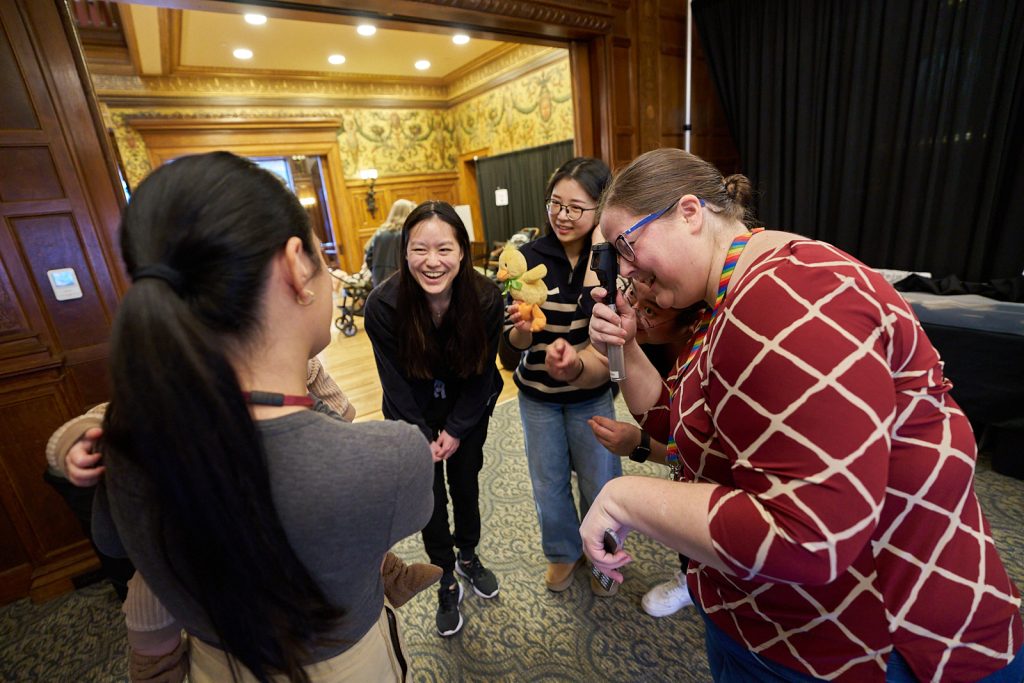
“We had years of eye doctors telling us there was nothing wrong with our son’s vision,” Rachel recounts about her own experience. “But we knew something wasn’t right with how he was using his vision. It wasn’t until we found specialists who understood CVI that we finally got answers.”
A key barrier to proper diagnosis is that traditional vision tests primarily assess the function of the eyes, not how the brain processes visual information. Standard eye charts and peripheral vision tests may not capture the unique challenges faced by individuals with CVI.
Additionally, CVI is easily hidden when co-occurring conditions are present and symptoms are masked under other neurological disorders that affect learning styles or cognitive functioning.
For parents wondering if their child might have CVI, Rachel describes several behaviors to watch for:
“Pay attention if your child has difficulty recognizing people, navigating spaces, or interacting with visually cluttered environments. They might tire quickly during visual tasks or show unusual visual preferences, like strong attraction to certain colors or light sources.”
Beyond Traditional Eye Exams
NECO has some strong connection to CVI awareness and leading the development of support and testing practices for people with CVI. The long-standing collaboration between NECO and Perkins has allowed both organizations to trailblaze in this field and help raise awareness in educators and medical professionals.
Dr. Nicole Ross, an Associate Professor at NECO and an Attending Optometrist at the NECO Center for Eye Care at Perkins, emphasizes the importance of “comprehensive clinical evaluations that extend beyond standard visual acuity tests.” Her and Dr. Martin’s research has focused on validating tools like the Teach-CVI screening tool, which helps identify CVI-related behaviors that might not be evident in traditional exams. The team is also investigating eye-tracking based tests to measure visual function in this diverse patient population.
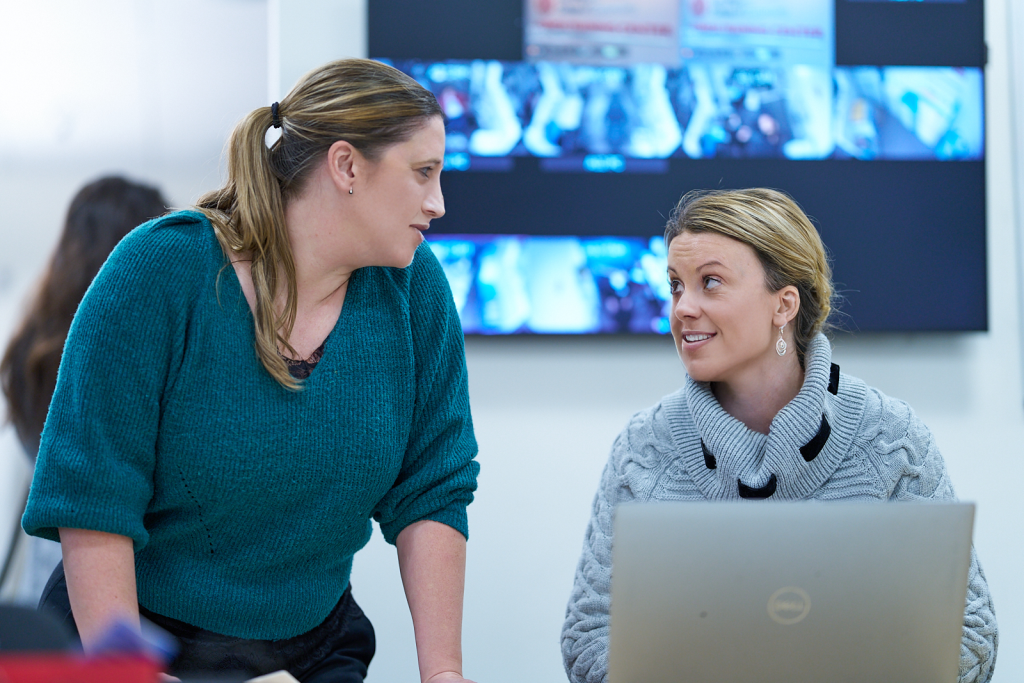
Through this research, other NECO doctors have become experts in ways of uniquely evaluating vision. Dr. Jem Martin, Assistant Professor of Optometry at NECO and an Attending Optometrist at the NECO Center for Eye Care at Perkins, conducts clinical functional vision examinations specifically tailored for individuals with disabilities. These assessments focus on how a person uses their vision in everyday activities, providing insights into the functional impact of CVI that standard tests might miss.
Dr. Barry Kran, Professor of Optometry at NECO and Optometric Director of the NECO Center for Eye Care at Perkins (Ret.), has developed specialized tools like the Mayer-Kran Double Happy Contrast cards. These cards are designed specifically for assessing contrast sensitivity in patients who are nonverbal or don’t know symbols—addressing a significant diagnostic challenge in the diverse CVI population.
“Current legal definitions of blindness often fail to capture the functional visual limitations experienced by individuals with CVI.”
Dr. Barry Kran,
whose advocacy includes efforts to revise these definitions
The Multidisciplinary Approach
Experts agree that CVI diagnosis requires a collaborative approach. “No single test can diagnose CVI,” Ilse explains. “It takes input from parents, educators, and different medical specialists to fully understand how CVI is affecting an individual.”
This is precisely the approach taken at both the CVI Center and the NECO Center for Eye Care at Perkins. Here, a team of specialists collaborate to provide comprehensive evaluations for patients with complex visual needs. Both centers serve as a specialized hub for CVI diagnosis, bringing together the collective expertise of professionals from multiple disciplines and helping outsource patient care between referrals to NECO for treatment and additional support services at Perkins.
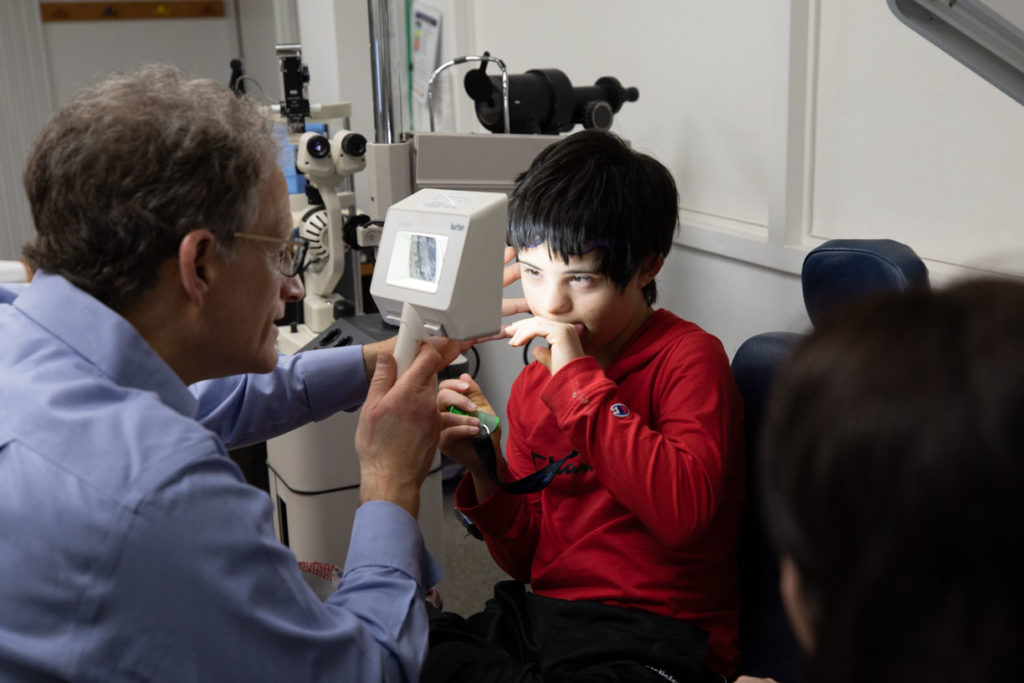
Photo courtesy of Perkins School for the Blind
Living with CVI: Personal Perspectives
The impact of CVI extends far beyond clinical settings into every aspect of daily life. For children with CVI, classroom environments can be overwhelming, social interactions challenging, and learning materials inaccessible without proper accommodations.
“Visual fatigue is a major factor for individuals with CVI,” Rachel explains. “The brain works overtime trying to process visual information, which means children might start the day engaged but quickly become exhausted as their visual system gets overloaded.”
Daily Challenges and Adaptations
Lacey shares how her daughter’s experience with CVI influences everyday activities: “Simple tasks like feeding my daughter require us to pay attention to her cues and follow similar routines. We’ve learned to adapt our routine at mealtime, as she knows it’s time to eat when she feels the tray and knows which chairs she’s sitting in. Her nonverbal cues of moving her place setting make it quite clear when she’s done or wants more.”
For other kids, personal adaptive habits have grown out of their preferences for processing information. Verbal or auditory supports can make life easier for individuals with CVI, albeit nontraditional to those without the condition.

“One student I worked with was an auditory learner,” shares Ilse. “He could get around independently, but would shout ‘BACON!’ when he was walking with others outside and he could no longer tell where people from his group were standing. The trick? He could tell who was around him and how far away they were standing based on the laughs or verbal responses from those around him.”
These adaptations highlight the unique workarounds and strategies that individuals with CVI develop to navigate their world. Understanding these individual adaptations is crucial to providing appropriate support, both at home and in educational settings.
The Emotional Journey
The emotional impact of CVI on individuals and families is significant. Before diagnosis, children may be misunderstood as inattentive or uninterested when they’re actually struggling to process visual information. Parents may feel frustrated and isolated when their concerns are dismissed by medical professionals.
“Getting a proper diagnosis was life-changing for us,” Lacey reflects. “Not only did it validate our observations, but it also connected us with the resources and community we needed to support our daughter.”
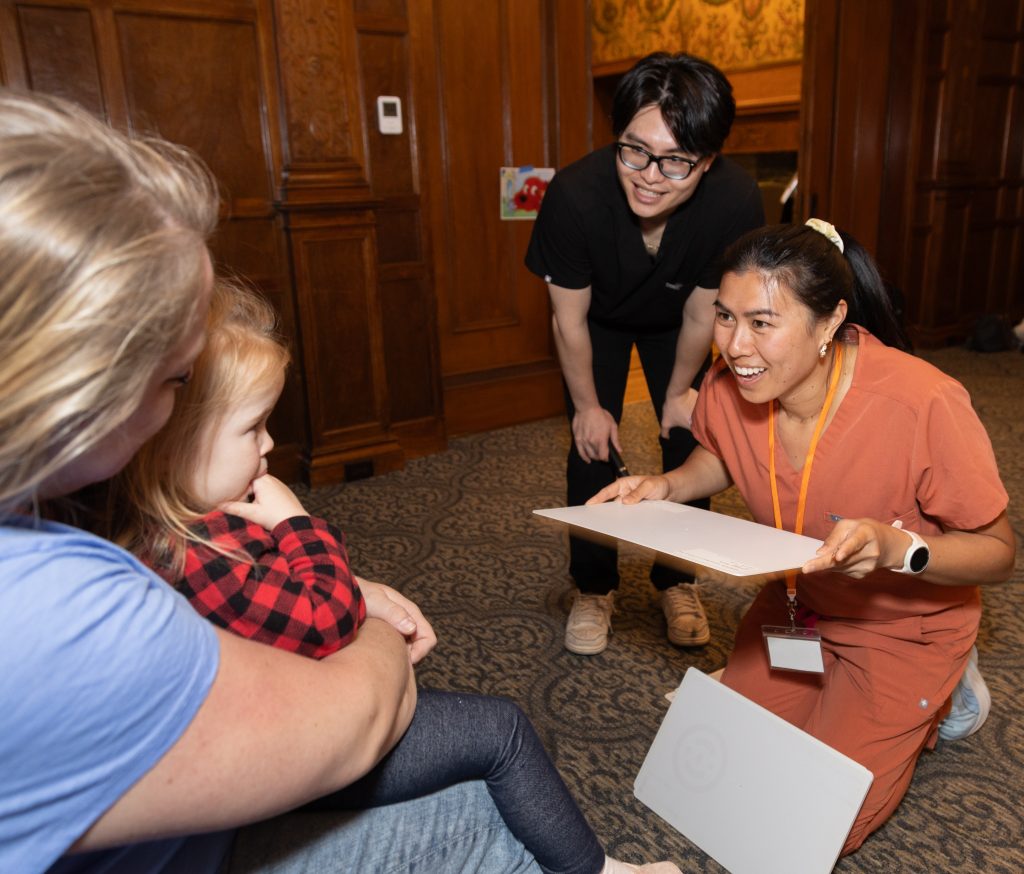
For older individuals with CVI, understanding their condition can provide relief and a framework for advocating for their needs. As Rachel notes, “When people understand why certain environments or tasks are challenging for them, they can better explain their needs and develop strategies that work for their unique visual processing style.”
The Collaborative Approach to Support
Supporting individuals with CVI requires a team effort that spans medical professionals, educators, families, and the individuals themselves. This collaborative approach is exemplified by the close relationship between Perkins School for the Blind and the New England College of Optometry (NECO).
The Perkins-NECO Affiliation
The NECO Center for Eye Care at Perkins serves as a centralized resource where experts like Dr. Nicole Ross, Dr. Jem Martin, and Dr. Barry Kran collaborate to advance CVI care. This specialized center provides comprehensive evaluations tailored to the unique needs of patients with visual, physical, and/or cognitive disabilities from across the country.
“The affiliation between Perkins and NECO creates a powerful synergy,” Rachel explains. “The academic-clinical relationship means that cutting-edge research directly informs clinical practice, while patient experiences guide research directions.”
Medical Providers: Beyond Traditional Eye Care
Medical professionals play a crucial role in identifying and supporting individuals with CVI, but awareness among healthcare providers remains limited.
“We’re working to bridge this gap,” Ilse notes. “Dr. Ross and Dr. Martin have written articles and conducted presentations on CVI, helping medical providers understand what to look for and when to refer patients for specialized assessment.”

Dr. Barry Kran has been particularly active in global education efforts, lecturing extensively in North America, Europe, the Middle East, India, and China on CVI and breaking down barriers to eye care for individuals with disabilities.
Parents: The Experts on Their Children
Parents of children with CVI often become the most knowledgeable advocates for their children’s needs. Their observations of how their child functions in daily life provide crucial information for diagnosis and treatment planning.
“Parents know their children best,” Lacey emphasizes. “They see the patterns of visual behavior across different environments and activities, which provides invaluable insights for medical providers and educators.”

Resources and Next Steps
For individuals and families affected by CVI, knowing where to turn for information and support is crucial. Perkins School for the Blind offers a wealth of resources through their comprehensive website, CVINow.org. Rachel emphasizes that “raising awareness is the first step toward ensuring that individuals with CVI receive the diagnosis and support they need to find success and improve quality of life outcomes.”
Expert Care
The NECO Center for Eye Care provides specialized evaluations and treatment plans for individuals with CVI. This center brings together experts from multiple disciplines to provide comprehensive care tailored to each individual’s unique needs.

Dr. Ross and her team of attending optometrists bring their extensive expertise in low vision rehabilitation, neuro-rehabilitation, and specialized assessment techniques to benefit patients with CVI.
Research and Innovation
Perkins and NECO hope to team up on research that will continue to advance our understanding of CVI and improve diagnostic and treatment approaches. Anticipated research focus areas include:
- Validation of screening tools like Teach-CVI
- Development of telerehabilitation methods to improve access to care
- Exploration of assistive technologies to enhance functional vision
- Remote assessment methods for individuals who cannot easily access specialized centers
The Path Forward
Despite being the leading cause of childhood visual impairment in developed countries, CVI remains underdiagnosed and misunderstood. Yet the work of organizations like Perkins School for the Blind and experts like Dr. Ross, Dr. Martin, and Dr. Kran offers hope for the future.
Through continued collaboration among medical providers, educators, researchers, and families, we can improve identification, diagnosis, and support for individuals with CVI. As awareness grows, more children and adults will receive the understanding and assistance they need to navigate a world that doesn’t often accommodate their unique visual processing needs.
“Our ultimate goal is for every individual with CVI to receive an accurate diagnosis and the support they need to access their world,” Rachel says. “With greater awareness and collaboration, we’re moving closer to that reality every day.”
For those who suspect they or their child might have CVI, the message from experts is clear: trust your observations, seek specialized assessment, and connect with resources like Perkins School for the Blind that understand the unique challenges and possibilities of life with CVI.
For more information about CVI or to connect with specialists at Perkins School for the Blind, visit cvinow.org or contact the NECO Center for Eye Care.
More NECO Headlines